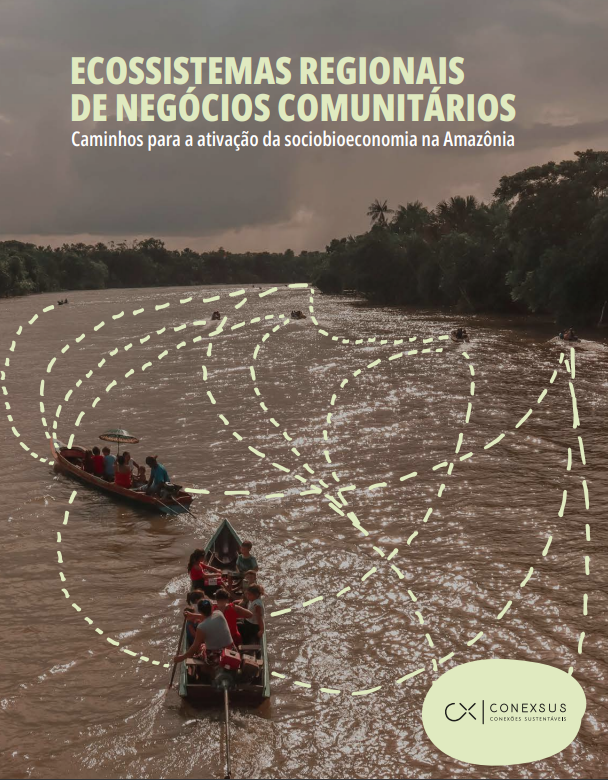
Through the Nossa Floresta Nossa Casa project, in partnership with Forest Trends, PPA and USAID, a collection of books was launched on the value chains of 21 indigenous peoples in 8 ITs that make up the Tupi Mosaic in Brazil, with the aim of developing economic initiatives that promote forest conservation. The books present concepts on indigenous territorial economic governance, challenges and opportunities for market access and specific activities underway in the territory.
Traditionally used as one of the main items in the diet of forest peoples, the Brazil nut has long been well-known in the food industry, standing out in the global market for nuts and chestnuts. More recently, the cosmetics industry has also been increasing its interest in the species. This value chain begins deep in the Amazon rainforest and drives the economy of traditional peoples and communities in the region like few other non-timber forest products: collecting the fruit is the main economic activity for tens of thousands of families in the Amazon.